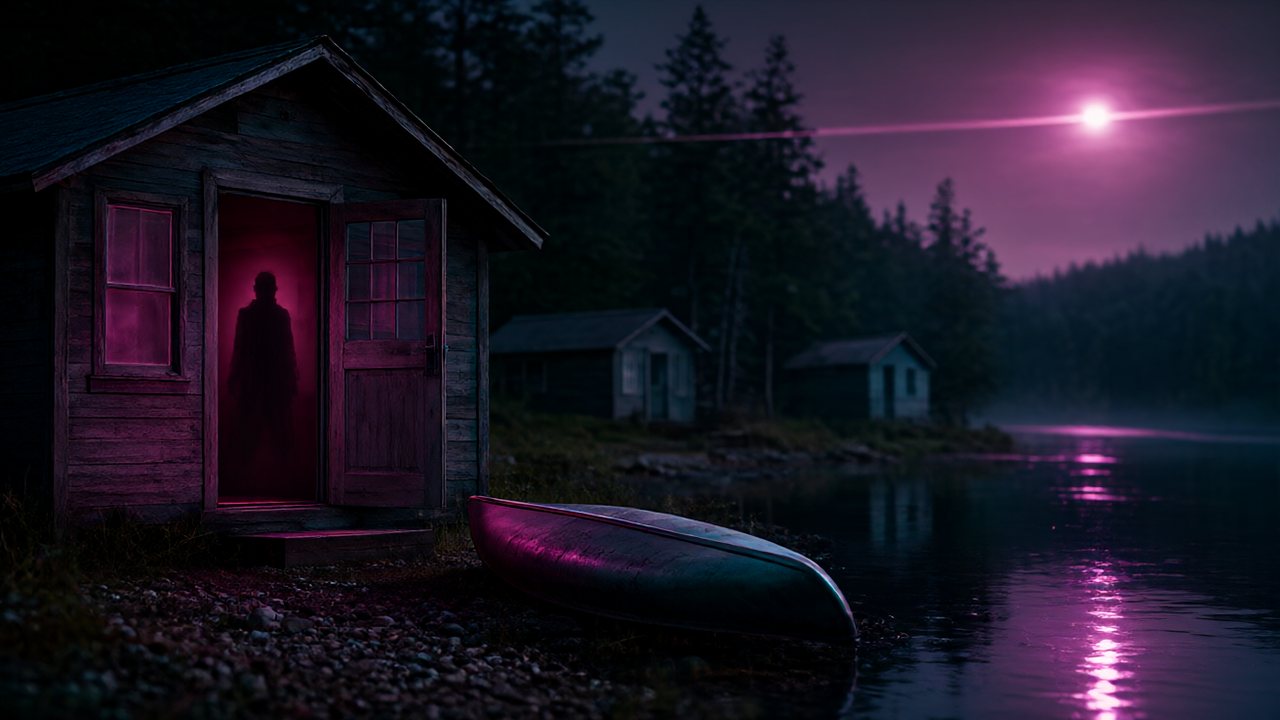
The slasher is the simplest machine in horror: a group of people, a killer, and a countdown. What separates the good ones is rhythm and personality, both the killer’s and the survivors’. This list follows the form from its early templates through its 1980s boom to the self-aware versions that came later.
Film facts last checked against Wikidata: November 13, 2026.
The Picks
| Film | First released | Director | Country | Wikidata |
|---|---|---|---|---|
| Psycho | 1960 | Alfred Hitchcock | United States | Q163038 |
| The Texas Chain Saw Massacre | 1974 | Tobe Hooper | United States | Q886597 |
| Black Christmas | 1974 | Bob Clark | Canada | Q783069 |
| Halloween | 1978 | John Carpenter | United States | Q221103 |
| Friday the 13th | 1980 | Sean S. Cunningham | United States | Q1243029 |
| A Nightmare on Elm Street | 1984 | Wes Craven | United States | Q329434 |
| Scream | 1996 | Wes Craven | United States | Q27411 |
| I Know What You Did Last Summer | 1997 | Jim Gillespie | United States | Q302174 |
| The Cabin in the Woods | 2012 | Drew Goddard | Canada, United States | Q45394 |
| Happy Death Day | 2017 | Christopher Landon | United States | Q29514884 |
Psycho (1960)
The shower scene redefines suspense through editing alone. A single room, stark lighting, and a score of screeching violins create a moment of pure shock that echoes through the rest of the film. Best for those who appreciate tension built in silence and sudden violence.
The Texas Chain Saw Massacre (1974)
People who want their horror raw and unflinching should try this. The camera moves like a nervous observer, never quite settling, capturing the heat-hazed Texas roads and the oppressive silence between screams. It’s best watched when you’re ready for something that feels less like a story and more like an event.
Black Christmas (1974)
Slow-burning and tense from the start, the film builds unease through silence and sudden noise. A single location, a house with thick walls and narrow hallways, amplifies every creak and breath. Best for when you want a quiet, unrelenting chill that creeps in under the surface.
Halloween (1978)
Not for those who want fast action or flashy effects — this is a deliberate, quiet creep. The score is all synth pulses and silence, making every footstep feel like a threat. Best for someone who likes tension built over time, watching with the lights low and the door locked.
Friday the 13th (1980)
Not subtle, and not trying to be. A lakeside camp, a cast picked off one at a time, and make-up effects that were shocking for their day and are still nasty now. Watch it as the blueprint: almost every slasher that followed borrowed its rhythm.
A Nightmare on Elm Street (1984)
Slow at first, then frantic, with a dream logic that twists everyday spaces into traps. The dream sequences use practical effects and distorted sound to make the familiar feel dangerous. Best for fans of clever kills and a creeping sense of helplessness.
Scream (1996)
It turns the slasher genre inside out by making you question every rule before the final kill. The dialogue crackles with sharp, self-aware wit, cutting through the tension with sudden bursts of violence. Best for a crowd that enjoys smart, fast-moving horror with a pulse.
I Know What You Did Last Summer (1997)
A steady, breathless rhythm builds through coastal towns and late-night drives, the kind that makes every passing car feel like a threat. The score leans into moody synth pulses and sudden silences, sharpening the tension between dialogue and the quiet hum of the road. Best for fans of classic teen horror with a pulse.
The Cabin in the Woods (2012)
Starts as the most ordinary cabin trip imaginable and keeps cutting away to people in an office, and working out why is most of the fun. The final act throws every monster idea it has at the screen. Best for viewers who know the slasher rules well enough to enjoy seeing them bent.
Happy Death Day (2017)
People who like time loops and campus horror should check this out. The camera stays close and steady during the frantic chase scenes, making the chaos feel immediate and claustrophobic. Watch it when you want a smart, fast-paced scare with a twist that sticks.
How This List Was Put Together
Every film above is tagged with the genre “slasher film” in Wikidata. From the films that matched, we chose the ones we would actually recommend to a friend; the order is not a ranking and nothing here is copied from another site’s list. Release year, director and country come from Wikidata (CC0 data), checked on November 13, 2026. “First released” is the earliest release date Wikidata records, which is sometimes a festival premiere a year ahead of the general release. Where Wikidata has no value, the cell is left blank.
Related lists: 80s horror, Halloween horror.
Quick Answers
How far apart are the oldest and newest films here? The earliest is Psycho (1960) and the most recent is Happy Death Day (2017), going by the first release date recorded in Wikidata.
Does any director appear more than once? Yes: Wes Craven (A Nightmare on Elm Street and Scream).
Is this list ranked? No. The order is not a ranking and we don’t attach scores. Every film is here because we’d recommend it for the reason given in its note.
Where can I watch these films? We don’t list streaming services for individual films, because catalogues change month to month and differ by country. Search the title in the apps you already pay for, or use a streaming search engine such as JustWatch and set it to your country.
Where do the film facts come from? Titles, release years, directors and countries are taken from Wikidata, a free CC0 knowledge base, last checked on November 13, 2026. The Wikidata column in the table links to each film’s record. The notes on each film are our own opinion.